
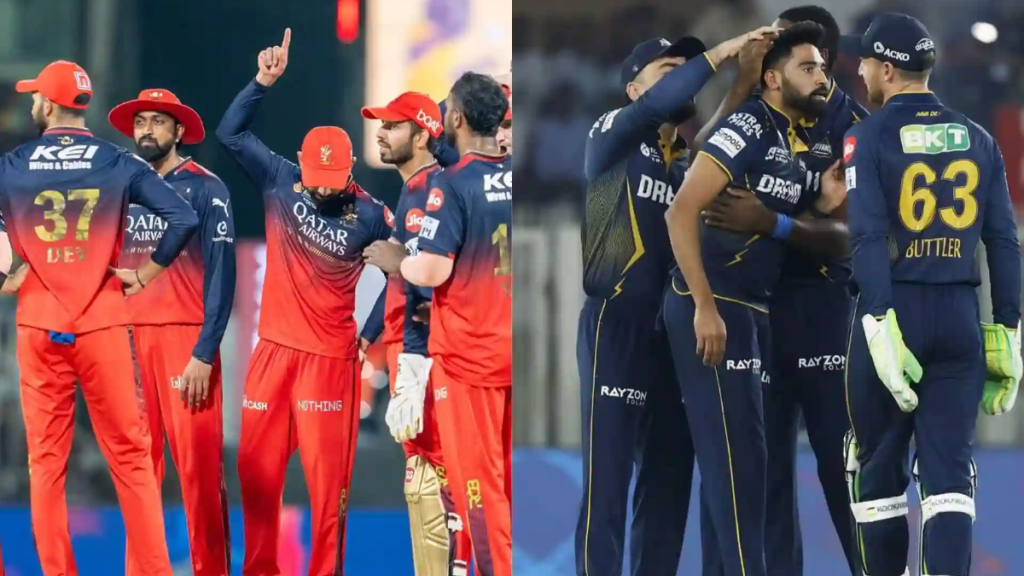

The Lucknow Super Giants vs Royal Challengers Bengaluru match scorecard from IPL 2026 tells the story of a rain-affected, high-scoring contest that went down to the final over. Lucknow Super Giants posted 209/3 in 19 overs, powered by a sensational century from Mitchell Marsh and a remarkable late cameo from Rishabh Pant. Royal Challengers Bengaluru responded with 203/6 in 19 overs, but LSG held their nerve to win by 9 runs via the DLS method.
The match was played on May 7, 2026, at the Bharat Ratna Shri Atal Bihari Vajpayee Ekana Cricket Stadium in Lucknow. RCB won the toss and chose to bowl first. Rain subsequently reduced the contest to 19 overs per side, making every over particularly important.
For LSG, Mitchell Marsh was the clear standout. He smashed 111 runs from 56 balls, including nine fours and nine sixes, at a strike rate of 198.21. Rishabh Pant then added an unbeaten 32 from just 10 balls, including four fours and two sixes. Together, their late acceleration pushed Lucknow beyond 200.
RCB’s chase had its own moments of brilliance. Rajat Patidar produced a spectacular 61 off 31 balls, while Tim David struck 40 from 17. Krunal Pandya and Romario Shepherd remained unbeaten at the end, but RCB finished six runs short of the revised target required to win.
This article covers the complete LSG vs RCB scorecard, batting and bowling figures, fall of wickets, key performers, powerplay numbers, turning points, playing XIs, head-to-head record and the final result.
Lucknow Super Giants vs Royal Challengers Bengaluru Match Details
| Match Detail | Information |
| Match | Lucknow Super Giants vs Royal Challengers Bengaluru, Match 50 |
| Tournament | Indian Premier League 2026 |
| Date | May 7, 2026 |
| Venue | Bharat Ratna Shri Atal Bihari Vajpayee Ekana Cricket Stadium, Lucknow |
| Toss | RCB won the toss and elected to bowl |
| Match Format | T20 |
| Scheduled Overs | 20 overs per side |
| Actual Overs | 19 overs per side |
| LSG Score | 209/3 in 19 overs |
| RCB Score | 203/6 in 19 overs |
| Result | LSG won by 9 runs (DLS method) |
| Player of the Match | Mitchell Marsh |
| Top LSG Scorer | Mitchell Marsh – 111 (56) |
| Top RCB Scorer | Rajat Patidar – 61 (31) |
| Best LSG Bowler | Prince Yadav – 3/33 |
| Attendance Context | Rain-affected contest |
RCB’s decision to bowl first meant Lucknow had the opportunity to set the tempo. The weather eventually became a major factor, with the match reduced to 19 overs per side. The revised conditions increased the value of aggressive batting, and LSG made full use of that opportunity.
LSG vs RCB Match Scorecard – Full Summary
The final scorecard was:
Lucknow Super Giants: 209/3 in 19 overs
Royal Challengers Bengaluru: 203/6 in 19 overs
Result: Lucknow Super Giants won by 9 runs (DLS method).
LSG’s 209 came at exactly 11.00 runs per over. RCB’s chase reached 203 at a scoring rate of 10.68 runs per over. On a normal 20-over calculation, that difference might appear small, but because the match had been shortened by rain and the DLS method was used, the revised target was the important number. RCB were unable to reach it.
The foundation of Lucknow’s innings was the opening partnership between Mitchell Marsh and Arshin Kulkarni. The pair put together 95 runs, giving LSG a strong platform despite the shortened match. Kulkarni eventually fell for 17 from 24 balls, but Marsh continued to attack.
Marsh’s dismissal came with LSG already at 165/2. Nicholas Pooran then contributed 38 from 23 balls before falling at 194/3. That left Rishabh Pant with the final burst, and he needed only 10 balls to score 32. His strike rate of 320 was one of the defining numbers in the match.
RCB’s chase began badly, with Jacob Bethell and Virat Kohli dismissed for single-digit scores. Devdutt Padikkal provided some stability, but Rajat Patidar was the player who truly changed the momentum. His 61 off 31 balls included six sixes and came at a strike rate of 196.77.
Tim David then produced a powerful 40 from 17 balls. Despite those contributions, RCB lost wickets at important moments and finished at 203/6.
Also read this: Royal Challengers Bengaluru vs Delhi Capitals Match Scorecard | Royal Challengers Bengaluru vs Rajasthan Royals Match Scorecard | Chennai Super Kings vs Punjab Kings Match Scorecard
Lucknow Super Giants Batting Scorecard
LSG’s batting innings was dominated by Mitchell Marsh. The Australian all-rounder combined power with controlled aggression, scoring 111 from 56 balls. His innings contained nine fours and nine sixes, meaning 90 of his 111 runs came through boundaries.
| Batter | Runs | Balls | 4s | 6s | Strike Rate | Dismissal |
| Mitchell Marsh | 111 | 56 | 9 | 9 | 198.21 | c Jacob Bethell b Josh Hazlewood |
| Arshin Kulkarni | 17 | 24 | 1 | 0 | 70.83 | c Rajat Patidar b Krunal Pandya |
| Nicholas Pooran | 38 | 23 | 4 | 1 | 165.22 | c Krunal Pandya b Rasikh Salam |
| Rishabh Pant | 32 | 10 | 4 | 2 | 320.00 | Not out |
| Aiden Markram | 1 | 1 | 0 | 0 | 100.00 | Not out |
| Extras | 10 | — | — | — | — | — |
| Total | 209/3 | 19 overs | RR 11.00 |
LSG lost only three wickets, which allowed the batting side to keep attacking almost throughout the innings. The first wicket came at 95 when Arshin Kulkarni was dismissed in the 9.2 over. Marsh then fell at 165/2 in the 16.1 over, and Nicholas Pooran was dismissed at 194/3 in the 18.2 over.
The key statistic is the contrast between Marsh and Kulkarni. While Kulkarni played the anchor role at 70.83, Marsh attacked at nearly 200. That balance allowed LSG to build a platform without losing too many wickets.
Pooran continued the acceleration after Marsh’s dismissal. His 38 from 23 balls came at a strike rate of 165.22 and included four boundaries and one six.
Then came Pant’s short but devastating innings. The LSG captain scored 32 from 10 balls, with four fours and two sixes. A strike rate of 320 meant that he added runs at a remarkable pace during the final stage of the innings.
LSG Bowling Scorecard
After posting 209, Lucknow needed wickets to prevent RCB from matching the required rate. Prince Yadav became the standout bowler with three wickets, while Mohammad Shami and Shahbaz Ahamad also made important contributions.
| Bowler | Overs | Maidens | Runs | Wickets | Economy |
| Mohammad Shami | 4 | 0 | 33 | 1 | 8.25 |
| Prince Yadav | 4 | 0 | 33 | 3 | 8.25 |
| Mayank Yadav | 4 | 0 | 50 | 0 | 12.50 |
| Digvesh Singh Rathi | 4 | 0 | 50 | 0 | 12.50 |
| Shahbaz Ahamad | 3 | 0 | 33 | 2 | 11.00 |
Prince Yadav’s figures were particularly valuable because his three wickets came at an economy rate of 8.25. Shami also delivered a controlled spell, taking one wicket for 33 runs.
Shahbaz Ahamad claimed two wickets, including the important dismissal of Rajat Patidar. His three overs cost 33 runs, but the timing of his wickets mattered considerably.
Royal Challengers Bengaluru Batting Scorecard
RCB’s batting innings was a combination of early setbacks and explosive middle-order hitting.
| Batter | Runs | Balls | 4s | 6s | Strike Rate | Dismissal |
| Jacob Bethell | 4 | 5 | 1 | 0 | 80.00 | c Prince Yadav b Mohammad Shami |
| Virat Kohli | 0 | 2 | 0 | 0 | 0.00 | b Prince Yadav |
| Devdutt Padikkal | 34 | 25 | 3 | 1 | 136.00 | c & b Prince Yadav |
| Rajat Patidar | 61 | 31 | 3 | 6 | 196.77 | c Aiden Markram b Shahbaz Ahamad |
| Jitesh Sharma | 1 | 3 | 0 | 0 | 33.33 | c Rishabh Pant b Prince Yadav |
| Tim David | 40 | 17 | 4 | 3 | 235.29 | c Digvesh Singh Rathi b Shahbaz Ahamad |
| Krunal Pandya | 28 | 16 | 2 | 2 | 175.00 | Not out |
| Romario Shepherd | 23 | 15 | 3 | 1 | 153.33 | Not out |
| Extras | 12 | — | — | — | — | — |
| Total | 203/6 | 19 overs | RR 10.68 |
RCB’s chase could hardly have started worse. Jacob Bethell fell for four, and Virat Kohli was dismissed for a two-ball duck. Prince Yadav was responsible for Kohli’s wicket, giving LSG an early advantage.
Devdutt Padikkal steadied the innings with 34 from 25 balls. However, the major acceleration came from Rajat Patidar.
The RCB captain played one of the most aggressive innings of the night, hitting six sixes and three fours in his 31-ball 61. His strike rate was 196.77. For a period, Patidar made the chase look completely achievable.
His dismissal at 112/5 was therefore a major turning point. Shahbaz Ahamad took the wicket, with Aiden Markram completing the catch.
Tim David then gave RCB another surge. His 40 from 17 balls came at an extraordinary strike rate of 235.29, including four fours and three sixes. But Shahbaz Ahamad removed him at 158/6, leaving RCB with a difficult final stretch.
Krunal Pandya and Romario Shepherd remained unbeaten, scoring 28 and 23 respectively, but the pair could not take RCB beyond the revised target.
RCB Bowling Scorecard
RCB’s bowlers faced an extremely difficult task after LSG’s openers established a strong partnership.
| Bowler | Overs | Maidens | Runs | Wickets | Economy |
| Bhuvneshwar Kumar | 4 | 0 | 34 | 0 | 8.50 |
| Josh Hazlewood | 4 | 0 | 49 | 1 | 12.25 |
| Krunal Pandya | 4 | 0 | 31 | 1 | 7.75 |
| Rasikh Dar Salam | 4 | 0 | 53 | 1 | 13.25 |
| Suyash Sharma | 2 | 0 | 21 | 0 | 10.50 |
| Romario Shepherd | 1 | 0 | 16 | 0 | 16.00 |
Krunal Pandya was RCB’s most economical bowler, conceding 31 runs in four overs and taking one wicket. He dismissed Arshin Kulkarni.
Hazlewood also claimed a major wicket when he removed Marsh for 111, but the Australian pacer conceded 49 runs in his four overs.
Rasikh Dar Salam picked up Nicholas Pooran’s wicket but conceded 53 runs. Romario Shepherd’s single over went for 16, highlighting how aggressively LSG attacked during the shortened innings.
LSG vs RCB Fall of Wickets
Lucknow Super Giants
| Wicket | Score | Batter | Over |
| 1st | 95 | Arshin Kulkarni | 9.2 |
| 2nd | 165 | Mitchell Marsh | 16.1 |
| 3rd | 194 | Nicholas Pooran | 18.2 |
LSG’s fall-of-wickets pattern shows just how effectively they protected their wickets. They crossed 95 before losing their first batter and reached 165 before Marsh departed. Even after losing their third wicket at 194, Pant ensured that the innings finished with maximum momentum.
Royal Challengers Bengaluru
| Wicket | Score | Batter | Over |
| 1st | 9 | Jacob Bethell | 0.5 |
| 2nd | 9 | Virat Kohli | 1.2 |
| 3rd | 104 | Devdutt Padikkal | 10.1 |
| 4th | 106 | Jitesh Sharma | 10.5 |
| 5th | 112 | Rajat Patidar | 11.3 |
| 6th | 158 | Tim David | 15.3 |
RCB’s fall of wickets tells a different story. Losing Bethell and Kohli for only nine runs created immediate pressure. The middle order recovered, but losing Padikkal, Jitesh and Patidar in quick succession prevented RCB from maintaining the required momentum.
LSG vs RCB Top Performers
Mitchell Marsh – LSG
Mitchell Marsh was unquestionably the standout performer.
His 111 from 56 balls contained nine fours and nine sixes. His strike rate of 198.21 was exactly what LSG needed in a 19-over innings. Marsh also formed the backbone of the innings by remaining at the crease long enough to take advantage of the shortened playing conditions.
His century gave LSG the platform to attack the final overs rather than simply trying to preserve wickets. He was subsequently named Player of the Match.
Rajat Patidar – RCB
Rajat Patidar was RCB’s leading run-scorer.
The RCB captain scored 61 from 31 balls, striking six sixes and three fours. His strike rate of 196.77 showed how aggressively he approached the chase.
Patidar’s innings was especially important because RCB had lost both Bethell and Kohli early. He rebuilt the chase and then attacked once the required rate started increasing. His dismissal at 112/5 changed the momentum of the match.
Prince Yadav – LSG
Prince Yadav produced the best bowling performance for Lucknow, finishing with 3/33 from four overs.
His wickets included Virat Kohli, Devdutt Padikkal and Jitesh Sharma. The early removal of Kohli was particularly important because it prevented RCB from building the kind of opening partnership that could have simplified the chase.
Tim David – RCB
Tim David produced one of the most explosive cameos of the match. His 40 off 17 balls came at a strike rate of 235.29.
His four fours and three sixes kept RCB in the contest after Patidar’s dismissal. However, Shahbaz Ahamad eventually removed him at 158, leaving the final overs for Krunal Pandya and Romario Shepherd.
LSG vs RCB Powerplay Score
The shortened 19-over format made the powerplay especially important.
LSG scored 68 runs during the mandatory powerplay, giving them an excellent start. They did not lose a wicket during those first six overs, which meant Marsh and Kulkarni could continue attacking without immediate scoreboard pressure.
RCB’s powerplay was far more difficult. The chase began with the dismissals of Jacob Bethell and Virat Kohli, both falling for single-digit scores. That meant RCB had to recover from 9/2 before the middle overs.
The contrasting powerplays essentially set the tone for the match. LSG had both momentum and wickets in hand, while RCB were forced to rebuild almost immediately.
LSG vs RCB Match Turning Points
Marsh’s 111
The biggest turning point of the match was Marsh’s century.
In a rain-shortened game, an innings of 111 from 56 balls is more than just a personal milestone. It changes the mathematical shape of the contest. LSG were able to score 209/3 in only 19 overs, putting RCB under pressure before the chase even began.
Pant’s late explosion
Rishabh Pant’s unbeaten 32 from 10 balls was another crucial moment.
LSG were 194/3 when Nicholas Pooran was dismissed. Instead of allowing the innings to slow down, Pant attacked immediately. His 320 strike rate pushed the final total above 200 and ensured that RCB’s chase would require sustained aggression.
Kohli’s early dismissal
Virat Kohli’s two-ball duck gave LSG a major advantage.
RCB had already lost Bethell, and Kohli’s wicket made the score 9/2. That forced the middle order to take responsibility in a chase where the required rate was already demanding. Prince Yadav claimed both early wickets.
Patidar’s counterattack
Patidar’s 61 gave RCB genuine hope.
He attacked the bowling and scored at nearly 200 strike rate. For a while, RCB appeared capable of matching LSG’s scoring rate despite the early wickets.
However, his dismissal at 112/5 removed the main batter who had controlled the middle phase of the chase.
Tim David’s assault
Tim David’s 40 off 17 balls briefly changed the equation again. His strike rate of 235.29 meant that RCB could still threaten the target despite losing wickets.
His dismissal at 158/6, however, left too much work for the remaining batters.
Rain and the DLS equation
The rain interruption was a fundamental part of the match.
The contest was reduced to 19 overs per side, and RCB were set a revised DLS target of 213. RCB finished on 203/6, which meant LSG secured a nine-run DLS victory.
This is important when interpreting the final score. Simply comparing 209 and 203 does not fully explain the result because the target was adjusted after the weather interruption.
LSG vs RCB Head-to-Head Record
The May 7 match was the eighth IPL meeting between the two sides. After LSG’s victory, RCB lead the overall head-to-head record 5-3.
| Season | Result |
| 2022 | RCB won by 18 runs |
| 2022 Eliminator | RCB won by 14 runs |
| 2023 | LSG won by 1 wicket |
| 2023 | RCB won by 18 runs |
| 2024 | LSG won by 28 runs |
| 2025 | RCB won by 6 wickets |
| 2026, Match 23 | RCB won by 5 wickets |
| 2026, Match 50 | LSG won by 9 runs (DLS method) |
The 2026 season produced a split result between the teams. RCB won the first meeting by five wickets at the M. Chinnaswamy Stadium on April 15, while LSG responded with a nine-run DLS victory in Lucknow on May 7.
The overall numbers therefore remain in RCB’s favour, but LSG’s latest win narrowed the gap.
LSG vs RCB Playing XI
Lucknow Super Giants Playing XI
Lucknow’s starting XI consisted of:
- Mitchell Marsh
- Arshin Kulkarni
- Nicholas Pooran
- Aiden Markram
- Rishabh Pant (captain and wicketkeeper)
- Akshat Raghuwanshi
- Himmat Singh
- Shahbaz Ahamad
- Digvesh Singh Rathi
- Mohammad Shami
- Prince Yadav
Mayank Yadav was among the impact options and subsequently came into the contest. The official match information also lists Mayank among LSG’s impact players.
Royal Challengers Bengaluru Playing XI
RCB’s starting XI was:
- Jacob Bethell
- Virat Kohli
- Devdutt Padikkal
- Rajat Patidar (captain)
- Jitesh Sharma (wicketkeeper)
- Krunal Pandya
- Romario Shepherd
- Bhuvneshwar Kumar
- Suyash Sharma
- Rasikh Dar Salam
- Josh Hazlewood
Tim David was used as an impact player and went on to play a major role in the chase, scoring 40 from 17 balls.
LSG vs RCB Match Result
Lucknow Super Giants won by 9 runs via the DLS method.
LSG’s final score was 209/3 in 19 overs, while RCB finished at 203/6 in 19 overs.
The result was shaped by three major performances. First, Mitchell Marsh’s 111 provided LSG with the dominant batting foundation. Second, Rishabh Pant’s 32 from 10 balls gave the innings a huge final push. Third, Prince Yadav’s three wickets disrupted RCB’s chase at critical moments.
RCB were not out of the contest until the closing stages. Patidar’s 61 and Tim David’s 40 gave them enough momentum to keep the chase alive, while Krunal Pandya and Romario Shepherd remained unbeaten.
However, the early wickets and the loss of Patidar and Tim David prevented RCB from completing the chase.
The nine-run margin should also be read in the context of the DLS calculation. The match had been reduced to 19 overs per side because of rain, with RCB needing to reach the revised target. They ended on 203, short of what was required.
Final Takeaway
The Lucknow Super Giants vs Royal Challengers Bengaluru match scorecard from IPL 2026 was a perfect example of how quickly a T20 game can change.
LSG took control through Mitchell Marsh, whose 111 from 56 balls was the defining innings of the contest. Arshin Kulkarni’s 17 helped Marsh build the initial platform, while Nicholas Pooran contributed 38 before Rishabh Pant delivered the final burst. Pant’s unbeaten 32 from only 10 balls pushed LSG to 209/3 in 19 overs.
RCB’s chase started poorly. Jacob Bethell and Virat Kohli were dismissed for just four and zero respectively, leaving the visitors at 9/2. Devdutt Padikkal then helped stabilise the innings before Rajat Patidar launched an aggressive counterattack.
Patidar’s 61 from 31 balls and Tim David’s 40 from 17 gave RCB a realistic chance of winning. Krunal Pandya and Romario Shepherd kept fighting until the end, but LSG’s bowlers had done enough damage earlier in the innings.
Prince Yadav’s three wickets were especially important. Mohammad Shami removed Jacob Bethell early, while Shahbaz Ahamad took the crucial wickets of Patidar and Tim David. Those breakthroughs prevented RCB from maintaining the required scoring rate through the final phase.
The weather added another layer to the contest. With the game reduced to 19 overs per side, the DLS method determined the revised target. RCB’s 203/6 was an impressive chase in isolation, but it was not enough against the adjusted requirement. LSG therefore secured a nine-run DLS victory.
For Lucknow, the victory was powered by explosive batting and timely wickets. For Bengaluru, the defeat was a reminder of how costly early wickets can become in a shortened chase. Marsh’s century, Pant’s late assault, Patidar’s counterattack and Prince Yadav’s three-wicket spell were the individual performances that ultimately defined the match.
The final scorecard tells the story clearly: LSG 209/3, RCB 203/6 — Lucknow Super Giants won by 9 runs (DLS method).
FAQs
1.Who won the LSG vs RCB match?
Lucknow Super Giants won the match against Royal Challengers Bengaluru by 9 runs via the DLS method. LSG scored 209/3 in 19 overs, while RCB finished on 203/6.
2.What was the LSG vs RCB final score?
Lucknow Super Giants scored 209/3 in 19 overs. Royal Challengers Bengaluru replied with 203/6 in 19 overs.
3.Who was the top scorer in LSG vs RCB?
Mitchell Marsh was the top scorer of the match. He smashed 111 runs from 56 balls, with nine fours and nine sixes.
4.Who was the top scorer for RCB?
Rajat Patidar was RCB’s highest scorer with 61 runs from 31 balls. He hit three fours and six sixes at a strike rate of 196.77.
5.Who took the most wickets in the match?
Prince Yadav took the most wickets, finishing with 3/33 in four overs for Lucknow Super Giants.
6.Who was Player of the Match?
Mitchell Marsh was named Player of the Match after scoring 111 from 56 balls.
7.Where was the LSG vs RCB match played?
The match was played at the Bharat Ratna Shri Atal Bihari Vajpayee Ekana Cricket Stadium in Lucknow on May 7, 2026.
8.How many times have LSG and RCB faced each other?
The May 7, 2026 match was the eighth IPL meeting between Lucknow Super Giants and Royal Challengers Bengaluru. Following LSG’s victory, RCB lead the overall record 5-3.
9.Why was the LSG vs RCB match reduced to 19 overs?
Rain affected the match, resulting in the contest being reduced to 19 overs per side. The DLS method was then used to determine RCB’s revised target.
10.How many runs did Rishabh Pant score?
Rishabh Pant scored an unbeaten 32 from 10 balls, with four fours and two sixes. His strike rate was 320.
11.How many runs did Virat Kohli score?
Virat Kohli was dismissed for a two-ball duck by Prince Yadav.
12.How many runs did Rajat Patidar score?
Rajat Patidar scored 61 from 31 balls, including three fours and six sixes.